
热门搜索: 天若有情
勇者行动
上厕所居然看到无敌风景 网友在寺坞岭山顶发现惊喜_我的网站

一 | “好想放把躺椅在厕所门口……”“我愿称这是杭州最美厕所,好想放把躺椅在厕所门口轻松一下。

While delivering a speech at the Stratbase Institute in Manila, Philippines, on Monday, Colby, the Under Secretary of War for Policy, laid out the US' so-called "flexible realism" approach to the Indo-Pacific, stressing that the US is "definitely not disengaging from Asia" but strengthening its forward posture and seeking to build a "denial defense" along the First Island Chain, according to a transcript of the speech released on the US Department of War website.
At the same time, he called on US allies and partners to step up, invest more in their own defense, and take responsibility for their own sovereign security. "We are looking for partners, not protectorates," Colby claimed.
The claims have drawn attention from some Philippine media outlets, with some linking them to the South China Sea issue. However, the transcript of Colby's speech showed that he did not mention China, the Global Times found.
A Manila Bulletin report noted that after calling on allies to invest more in defense, Colby cited the Philippines as an example of the "kind of partner Washington wants to work with." He praised Manila for "strengthening its military and coast guard capabilities while deepening operational cooperation with the US" amid what the report described as China's "aggression" in the South China Sea.
Colby's visit to Manila marked his first official trip to Southeast Asia as an undersecretary under the Trump administration. He is scheduled to travel from Manila to Jakarta, Indonesia; Bangkok, Thailand; and Phnom Penh, Cambodia, said the report.
Meanwhile, a Manila Standard report interpreted Colby's remarks as showing that "the US is working closely with the Philippines" to strengthen Manila's military capabilities and protect its sovereign rights in the South China Sea, despite the fact that Colby did not mention China in his speech.
The US appears to be adopting a more retrenchment-style approach, shifting from leading directly to relying on regional allies to take the frontline role while providing support. This approach allows Washington to advance its interests while lowering its own costs, Song Zhongping, a Chinese military affairs expert, told the Global Times.
Song noted that Washington seeks to use repeated maritime frictions to tie down Chinese resources, which helps explain Colby's praise for Manila: the Philippines bears part of Washington's strategic burden while receiving largely rhetorical US support.
A South China Morning Post report on Tuesday noted that Colby avoided mentioning the recent disputes over Huangyan Dao, despite Washington having criticized China's establishment of a nature reserve there just two days earlier. The report described the omission as a "measured tone" ahead of a potential meeting between the Chinese and US leaders.
Washington's primary concern is its own interests. At the core of its "Indo-Pacific strategy" is strengthening its alliance network by pushing partners such as the Philippines to shoulder greater security burdens in pursuit of US strategic goals. As US-China diplomatic dynamics evolve, countries serving as Washington's geopolitical spearheads in confrontations with China risk being left behind, said some observers.
Song noted that this also reveals the fragility of the US-Philippine relationship.
The US has encouraged the Philippines to take the front line in confrontations with China while offering mostly rhetorical support. Should tensions escalate, Manila would bear much of the cost on its own, said the expert.
。上完厕所出来如同大片即视感,大江大山映入眼帘。”网友“fha”在网上发帖感叹。网友所说的拥有无敌风景的厕所位于萧山义桥寺坞岭。
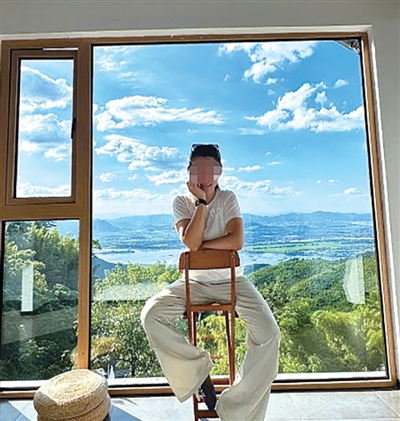 上午,橙柿记者从萧山出发,导航到“寺坞岭”,途经时代高架,全程40公里。到达义桥镇,最难走的是上山的10公里,号称“萧山天路”“杭州人自己的318线”,呈60度的坡度,油门都得使劲踩,转弯处一个接着一个。到达山顶,眼前一大片茶园和竹林。站在山顶平台,能望到富阳方向,近处是钱塘江、浦阳江、富春江三江交汇,村落点缀在江河竹林中。在路人指引下来到寺坞岭自然地,是一座二层三合院的白墙灰瓦建筑。这里是萧山和富阳的交界制高点,海拔520米左右,面积约500亩,也是《富春山居图》的实景取景地之一,视野封神。既能俯瞰三江盛景,又能逛小众展馆。有介绍说:“自然地以云峰山为主体,通过森林生态恢复提升生物多样性,以山体变化展现生态修复历程,集生态保护、科学研究、科普宣传、自然教育为一体,旨在让更多公众了解生物多样性、本土物种以及生态修复的意义。”按照“卫生间”指引牌,记者走向网友说的厕所。突然听到一阵“哇哇哇”的欢叫,寻声过去,一女生举起手机冲着爸妈喊:“快站在那里拍照。
二 | ”走过5米多长的通道,眼前豁然开阔,整面玻璃墙外全是风景,竹林、村落、江水……女生一家三口来自上海,自驾游来到杭州,她告诉记者,萧山这边山多水美,自己做了攻略,跑到寺坞岭,想不到有意外的收获,“这个地方太美了”。还有一家人从下沙来,也在拍照合影,他们也是看到网上“最美厕所”的视频,专程跑过来,在厕所这边待了十分钟,大伯跟记者说,就是上山的路太难开了,坡度大,等下看看下山的路怎么样。

三 | 这里还有生态科普馆、生态修复馆、一些配套休闲区。生态科普馆陈列超多萧山本土高山植物、野生动物标本。生态修复馆展示本地山林生态保护、竹林修复的科研成果,小众又有教育意义。记者了解到,寺坞岭自然地由万向三农集团的民生惠通公益基金会2023年开始运营。工作人员告诉记者,自然地有三个展厅,介绍本地物种,植物、昆虫和山林生态修复全过程,参观免费,周末还有自然教育的活动。“最美厕所”是最近有游客拍了视频才火起来的,一些游客专程开车过来。下山依旧是山路十八弯,但坡度明显缓和很多,下山路又叫墅溪古道,下了山是墅溪村,打卡可导航寺坞岭自然地。
Current article:http://www.jiaopeikongbenlo.pics/6xtold/20260826/4450989.xls
Published on:04:50:29
栏目相关
- 哈马斯想要什么
- 苹果首款带摄像头的耳机!AirPods神秘新品功能揭晓
- 湖南推进工业产品质量追溯 累计制发“数字身份码”2.49亿张,湖南推进工业产品质量追溯 累计制发“数字身份码”2.49亿张
- 2026中国网络媒体足球精英赛赛程公布
- 法医斯科特-罗德确认拉斯维加斯外星人录像的真实性
- 2026绿色算力(人工智能)大会:聚焦词元经济
- 复星医药:上半年归母净利润17.21亿元,同比增长1.1%
- 【仓单】8月26日郑商所玻璃期货仓单较上一日下降11张
- 环境美了 邻里和谐了
- Haryana DElEd Exam 2025: हरियाणा बोर्ड ने डीएलएड 1st एवं 2nd ईयर डेट शीट की जारी, देखें किन डेट्स में होंगे एग्जाम एग्जाम
- “黄四姐”牵手“刘三姐” 湖北建始上演民族交融盛会
- 超市称重零食暗藏套路,遇到缺斤短两该怎么维权
热门排行
- 这技能如何?433晒曼联新援巴莱巴此前臀部颠球视频,弹力十足
- 区应急局深入重点企业开展安全隐患大检查
- 巴基斯坦开普省发生爆炸 造成5人死亡
- 更强的动力+全新的底盘调校 大众计划推出ID.2 GTI Clubsport版本
- 曼晚:曼城直接传达了不续约决定,德布劳内感到震惊和受伤
- 苹果拟推出全新Mac mini:跳过M5 搭载M6芯片
- 抚顺市举行庆祝中华人民共和国成立75周年升国旗仪式
- 【仓单】8月26日大商所PP期货仓单较上一日下降402手
- IKBC E401机械键盘上架:87键樱桃轴,C型接口
- 中国驻泰使馆:遭绑架中国公民已得到妥善安置
- Shenzhen in global spotlight, opening new Asia-Pacific chapter(1/4)
- 范·迪塞尔确认《Fast Forever》将于12月开拍