
携程
Pony.ai’s autonomous-driving distance tops 100m km as China scales up L4 commercialization_我的网站

A |
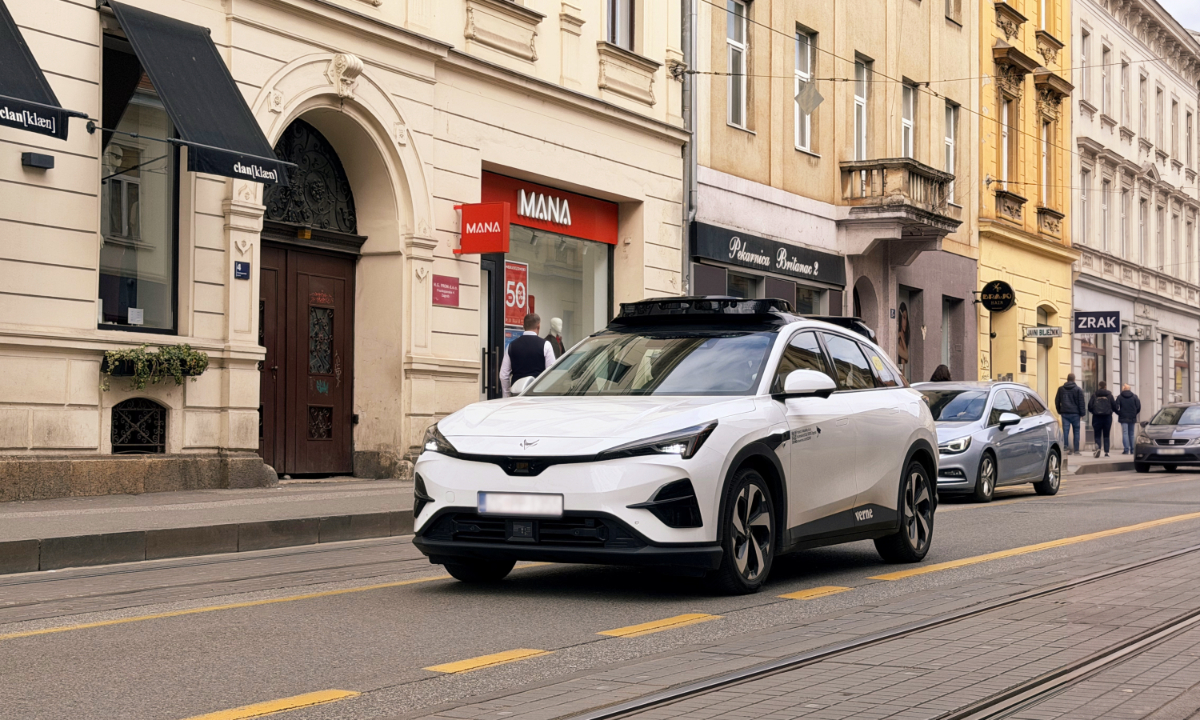
Chinese autonomous-driving company Pony.ai said on Monday that its cumulative autonomous-driving distance worldwide has surpassed 100 million kilometers, marking the latest milestone as China's driverless sector moves from technology validation toward mass production and scaled commercial deployment.
The milestone comes as L4 autonomous driving gains commercial traction across passenger transport and logistics in China, while Chinese companies are accelerating overseas deployment through partnerships with local operators in markets including Europe and Southeast Asia.
Industry experts said that the significance goes beyond rising distance. As commercialization gathers pace, the next phase of competition will increasingly hinge on whether autonomous-driving technology can be deployed at scale, brought down to commercially viable costs and replicated across different transport scenarios and markets.
At a recent media briefing, Pony.ai said that its fourth-generation L4 autonomous electric heavy-duty truck had entered mass production, with commercial operations expected to begin in the coming months. The company plans to deploy 500 to 1,000 trucks over the next two to three years across long-haul freight, bulk cargo transport and port logistics.
A notable part of that transition is the sharp decline in costs. Autonomous-driving hardware costs for Pony.ai's fourth-generation heavy truck are about 70 percent lower than for the previous generation, according to the company.
Similar cost reductions are also emerging in robotaxis. Pony.ai said on its official blog that the bill-of-materials cost of the autonomous-driving kit for its seventh-generation robotaxi has fallen 70 percent from the previous generation, helping the company achieve unit-economics breakeven in Guangzhou and Shenzhen, South China's Guangdong Province.
China's autonomous-driving sector is moving from technology validation to large-scale commercial deployment, underpinned by the rapid accumulation of real-world driving data, Pan Helin, a member of the Expert Committee for the Ministry of Industry and Information Technology, told the Global Times on Monday.
"Continuous road testing allows L4 systems to better adapt to local traffic conditions, laying the groundwork for wider commercial use," Pan said.
China has opened multiple cities to autonomous-driving applications, with commercialization gathering pace. As deployment expands and marginal technology costs fall, autonomous driving is expected to unlock significant commercial value and emerge as a new form of mobility, veteran industry analyst Liu Dingding told the Global Times.
Pony.ai aims to expand its robotaxi fleet to more than 3,000 vehicles by the end of 2026 and operate in 20 cities worldwide, with nearly half of those cities overseas. It also plans to develop an international version of its seventh-generation robotaxi tailored to different regulatory requirements and infrastructure, supporting the deployment of more than 1,000 vehicles in overseas markets.
Pony.ai's ambition also reflects a broader push by Chinese autonomous-driving companies to expand overseas.
On August 3, WeRide announced a partnership with Danish shared-mobility platform GreenMobility to deploy autonomous ride-hailing services in Denmark, marking its first entry into the Nordic region and sixth European market. Subject to regulatory approval, the service is expected to open to the public in the first half of 2027 using WeRide's latest GXR L4 robotaxi.
WeRide said on its website that its autonomous-driving products are now deployed in more than 40 cities across 12 countries. The company holds autonomous-driving permits in eight markets and operates a global L4 fleet of more than 3,000 vehicles.
A similar expansion is taking place in public transport. On July 17, Chinese autonomous-driving company MOGOX announced a strategic partnership with Singapore-based ComfortDelGro Bus. The two companies will cooperate on autonomous-vehicle deployment and operations, commercial expansion and coordination with regulators.
Pan said that China's autonomous-driving sector has two key advantages: a broad supplier base for major components and a large domestic market that allows companies to deploy services widely and accumulate real-world data. Advances in simulation and synthetic-data technologies have further strengthened the sector's ability to train and refine autonomous-driving systems.
Liu pointed to the cost benefits of scale. As deployment expands, the cost of key automotive-grade components such as lidar and chips continues to fall, improving the economics of commercial operations and creating more room for technological iteration, he said.
。

B | “所有队员都克服了很大的困难,付出了很多努力,从世界杯到亚洲杯,取得成绩当然令人高兴,但高兴在这一秒就过去了,因为我们清楚地知道,今后的道路只会越来越难,面临的困难也只会越来越多。

C | ”许佳敏说,“所以我们要记住这一刻,也要忘记这一刻,准备好面对更多的挑战。”上个月在比利时安特卫普举行的三人篮球世界杯比赛中,中国女队获得铜牌。尽管相较于上届世界杯金牌的成绩稍有逊色,但从比赛过程来看,中国三人女篮仍然处在世界顶尖强队的行列里。自从许佳敏接手中国三人女篮以来,她们在参加的每一届国际大赛中都能站上领奖台——2018年亚运会金牌、2019年世界杯冠军、2020东京奥运会铜牌、2022年世界杯铜牌,再到这一次的亚洲杯夺冠。“每一次比赛对我来说都是学习的过程,这次比赛也是让球员继续积累经验。接下来成年组和U23的队伍还要参加一些其他比赛,我们还是希望通过比赛能发现自己的问题,然后在训练中去解决问题,争取每一站比赛都能取得进步,”许佳敏说。相较于上个月的世界杯,中国三人女篮教练组对此次参加亚洲杯的阵容做了一些调整。

D | 在保留东京奥运会的核心三人组王丽丽、万济圆和张芷婷的同时,用黄琨替换了曹君伟。许佳敏表示,这样的球员轮换在未来很长一段时间甚至到巴黎奥运会前都会是常态。

E | “今年主要的任务就是人才储备、梯队建设和阵容磨合,所以我们会不断尝试新的阵容,不断磨练年轻队员,为明年的奥运积分赛和2024年奥运会做好充分的准备。阵容这块我们不会太早确定,因为每个队都在变化,趋势也在变化,我们只能做好各种准备。

F | 希望到巴黎前有一个比较完美的阵容可以去冲击奥运会。”许佳敏说。结束亚洲杯的比赛后,中国三人女篮将继续前往欧洲进行数月的海外集训并参加一些国际赛事。
Current article:http://www.jiaopeikongbenlo.pics/news/20260826_145943.doc
Published on:02:41:31
栏目相关
- ラウンドガールより綺麗!?18歳”美人すぎる”世界王者が防衛成功!美しき脚にも注目
- 5岁萌娃与民警老爸吃饭,默契配合抓网逃
- “代工之王”富士康的焦虑,需要特斯拉来治?
- 下周4只新股申购 A股年内已有7只“大肉签” 单签盈利均超10万
- 东亚杯收官,中国队第3
- 勇士官宣:签下自由球员前锋乔治·尼昂 后者将身披32号球衣
- 大谷翔平は「最後は俺いきますと言うと思う」栗山英樹氏 前回WBC決勝と同じ状況になったら
- 韦东奕主编练习册,迫于压力下架?
- 匠心承师道,精业筑未来——2024学年紫幼硕师营智慧班主任系列活动
- 海口赛区成“第三方赛地”主要候选地
- 重磅应用密集上线,同时“硬刚”谷歌、亚马逊和Meta,OpenAI急了?今年要“烧”85亿美元
- 代码显示谷歌正在为 Google Play 商店应用开发 AI 图片搜索功能
热门排行
- 荣晟环保:上半年净利润同比增长65.54% 拟10派6元
- 轻量云服务器 vs ECS:新手站长最容易搞混的两种产品,到底该怎么选?
- 新的《国王的荣耀》即将发布:新的客户服务反馈
- 俄军又被打崩了,乌军6个旅在红利曼反攻,一夜夺走40%控制区,兵器海陆空,原创 俄军又被打崩了,乌军6个旅在红利曼反攻,一夜夺走40%控制区
- 江苏防台风应急响应提升至Ⅲ级
- 陈盈骏18+7 朱松玮17分 北京7人上双3-1淘汰北控进4强
- 《昭和米国物语》女主芳容终于公布!酷似《大逃杀》《杀死比尔》女星?
- 두산·남동발전 “네팔 연락 두절 직원 상황 파악중”…대책본부 구성
- 6人开着三辆车撞击酒铺抢劫未遂,这座城市偷车猖獗
- 李宁就产品设计发布声明
- Akshaye Khanna’s viral Dhurandhar dance was unplanned? Find out
- 乌前总理:泽连斯基陷入新腐败丑闻
- Copyright @ 2016-2018 我的网站 版权所有