朗读者
120 Bahadur Gets Tax-free Status in Delhi, CM Rekha Gupta Says It Honours Soldiers_我的网站

一 |
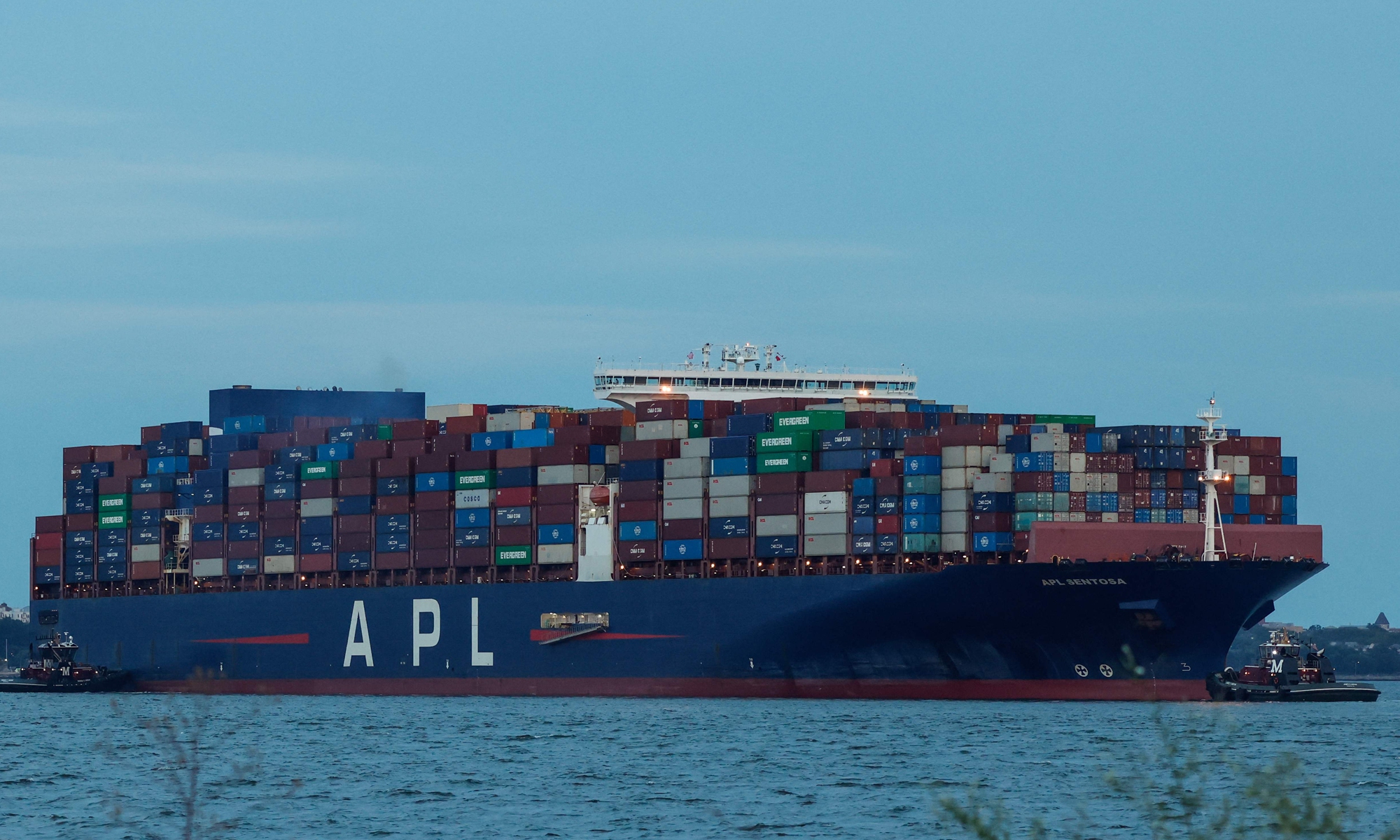
Months-long American export license delays are costing the US billions in exports and eroding American market share globally, the US-China Business Council (USCBC) said in a flash survey released on Tuesday.
The survey noted that poorly calibrated US export controls weaken American companies in China, ceding market share to foreign competitors while reducing the profits available for research and development (R&D).
Designed originally to safeguard national security and serve legitimate foreign policy interests, the US export licensing system has become increasingly politicized, gradually turning into a political tool that obstructs normal economic and trade exchanges. The USCBC survey serves as a stark reminder of how such overreach has backfired on American companies.
In recent years, US politicians have clung to the misplaced belief that restricting exports of advanced goods and core technologies would slow the upgrading of China's tech industry and secure America's technological supremacy. Yet, they overestimated their leverage, while grossly underestimating the developmental resilience that China has built over decades of growth.
Today's China is no longer a passive follower or technology importer. Instead, it has grown into a robust innovation powerhouse with complete industrial chains and strong endogenous driving forces in numerous key technological sectors. Rather than stifling China's technological progress, America's escalating containment measures have only forced China to accelerate industrial upgrading and supply chain optimization.
In the meantime, while US politicians have been indulging in the illusion of building a "tech wall" through licensing restrictions, the self-inflicted damage to the US has grown increasingly impossible to ignore. Reuters reported in August 2025 that thousands of license applications by US companies to export goods and technology around the globe, including to China, were in limbo because turmoil at the agency in charge of approving them had left it nearly paralyzed.
The USCBC survey also listed license delays as the most common challenge identified by 95 percent of companies. For items bound for Chinese customers, two-thirds of companies have had licenses pending for at least three months, exceeding the US Commerce Department's statutory requirements to process applications within 90 days, and 31 percent have had licenses pending for one to two years.
As a result, American tech companies can only watch helplessly as orders that once belonged to them flow to suppliers in other countries. These licensing delays not only impose administrative costs far exceeding expectations, but also severely disrupt normal cross‑border commerce. From semiconductor components to high‑end industrial materials, and from aerospace ancillary products to cutting‑edge research instruments, countless routine trade transactions have been artificially severed. The market advantages that US firms took years to forge is being eroded by the very policies meant to protect them.
From a deeper economic perspective, the export licensing system is particularly lethal to America's innovation ecosystem. Usually, companies allocate a significant portion of their revenue to R&D and technological innovation. However, if the products resulting from these investments cannot be sold in a major market, investment returns will be affected, and the incentive for companies to continue investing in innovation will be undermined. As underscored by the USCBC survey, the export licensing regime diminishes America's ability to innovate and undermines US economic security.
In trying to contain China's industrial rise, the US has ended up undermining its own interests, laying bare the fundamental divide between two development paths. On one hand, the US attempts to fragment global industrial chains through administrative intervention, trade barriers and technological "decoupling" to sustain its dominant position. Yet, such obstructive practices only undermine the competitiveness of domestic industries and weaken America's own innovative vitality.
On the other side, China adheres to high-standard opening-up and win-win cooperation. By continuously opening its vast domestic market and providing foreign companies with a stable business environment, China has built a mutually beneficial global industrial collaboration network. China understands that genuine competitiveness comes from sustained independent innovation, sophisticated industrial supporting systems and market vitality. Precisely because China has chosen to expand openness and deepen cooperation, it has demonstrated remarkable resilience in the face of external containment and constructed a globally integrated supply network.
。 Chief Minister Rekha Gupta announced on Thursday that the war film 120 Bahadur has been granted tax-free status in Delhi. The movie, which features Farhan Akhtar in the leading role, is based on the Battle of Rezang La during the 1962 Sino-Indian War. In a post on X Rekha Gupta wrote that the film “pays tribute to the extraordinary courage, leadership, and sacrifice of the 120 soldiers of Charlie Company, 13 Kumaon Regiment.” She added, "The film highlights the inspiring leadership of Major Shaitan Singh Bhati, whose actions and sacrifice remain a defining symbol of courage in India’s military history. As a special mark of respect to the valiant soldiers, the Delhi Government has decided to grant tax-free status to the film in Delhi from 28th Nov." The film 120 Bahadur features Farhan in the role of Major Shaitan Singh, who leads one of the most remarkable last stands in military history. This historical battle at Rezang La saw 120 Indian soldiers bravely defend the territory against more than 2000 Chinese troops. The film has received praise from political figures previously. On Wednesday, Akhilesh Yadav, leader of the Samajwadi Party, described it as "a commendable film conveying a positive message!" This was responded to by a response from Farhan. Expressing gratitude to the former Chief Minister of Uttar Pradesh for watching the film and acknowledging the team's efforts, Farhan posted on Twitter, "Thank you very much, Akhilesh ji. It is a matter of great joy for the entire team of 120 Bahadur that you took the time to watch the film and also spoke words of praise for it." 120 Bahadur, directed by Razneesh Ghai and produced by Farhan's Excel Entertainment, also features Raashii Khanna, Vivan Bhatena, and Ankit Siwach. Also Read: Shabana Azmi Lauds Farhan Akhtar’s Performance in 120 Bahadur。
Current article:http://www.jiaopeikongbenlo.pics/news/20260826_2698.doc
Published on:19:34:56


