
守法公民
马斯克证实:SpaceX 将在星舰稳定运营后逐步退役猎鹰 9 火箭_我的网站

A |
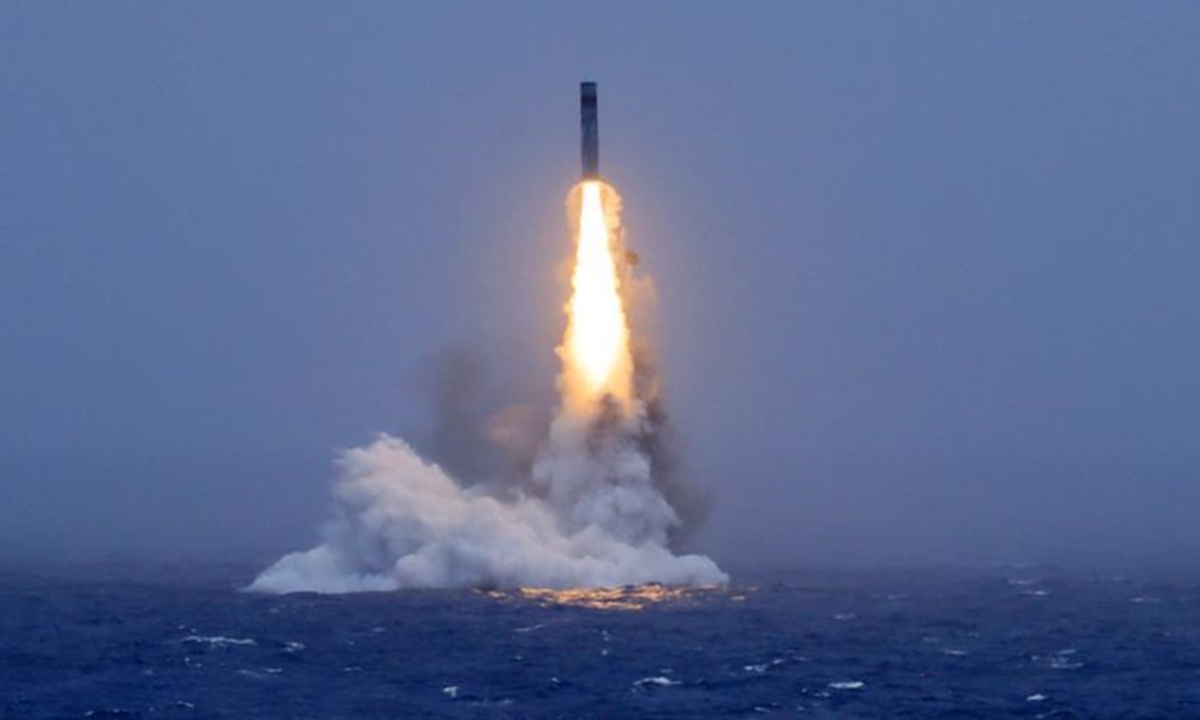
China on Wednesday slammed a US-led joint statement regarding China's notification of a ballistic missile launch, calling the move as being driven solely by political motives and exposing the hypocrisy and double standards of the US and certain countries.
"The so-called joint statement by the US and relevant countries at the Conference on Disarmament, which brandished the Hague Code of Conduct Against Ballistic Missile Proliferation and alluded to China's missile test launch, was driven solely by political motives and fully reveals their hypocrisy and double standards," Chinese Foreign Ministry Spokesperson Guo Jiakun said on Wednesday.
China urges relevant countries to stop abusing multilateral arms control mechanisms, replace irrational confrontation with sincere dialogue and create conditions necessary for enhancing dialogue and exchanges in the area of arms control, Guo said.
The comments came after China's Ambassador for Disarmament Affairs Li Chijiang firmly rejected the US-led joint statement at a UN meeting in Geneva on Tuesday local time, stressing that China's legitimate defense modernization should not be called into question, and its goodwill in providing advance notification of missile launch should not be hijacked by geopolitical calculations.
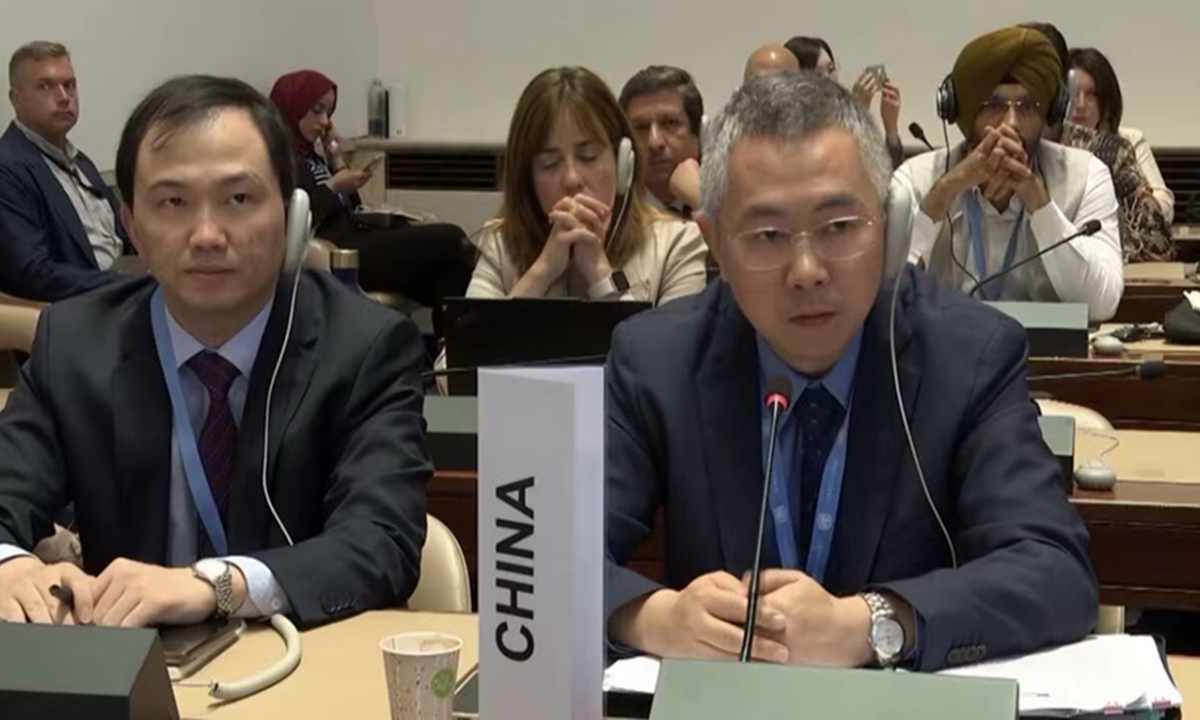
At a plenary meeting of the Conference on Disarmament in Geneva on Tuesday, the US and other 40 countries issued a joint statement on what they called "notifications of ballistic missile launches," criticizing China's submarine-launched intercontinental ballistic missile test conducted in July.
In response, Li Chijiang called the move political manipulation and blatant double standards and said China firmly opposes the abuse of the Conference on Disarmament for political maneuvering.
Driven by its own political interests, the US had rallied a number of countries, including some that are not members of the conference, to join the statement and had nitpicked and leveled baseless accusations against China's goodwill gesture of providing advance notification of the missile test, he said.
He noted that the US criticism was groundless, saying Washington had cited the voluntary political commitment of the Hague Code of Conduct Against Ballistic Missile Proliferation (HCOC) to demand that China provide advance notifications of missile launches. However, China is not a member of the HCOC and is therefore not bound by its provisions.
The Chinese People's Liberation Army Navy announced on July 6 that one strategic nuclear submarine of the navy successfully launched a strategic missile carrying a dummy warhead toward relevant high seas of the Pacific Ocean at 12:01 pm, which landed precisely within the designated waters.
China notified relevant countries in advance of the test launch of a nuclear submarine-based strategic missile, demonstrating the openness and transparency of the Chinese armed forces, said Chen Xi, a spokesperson for the Ministry of National Defense, at a press conference in July.
The US led statement at the Geneva disarmament conference seeks to inject geopolitical rivalry into a multilateral arms control platform. Rather than advancing genuine disarmament, Washington is seeking to stigmatize China as a security threat, constrain its legitimate defense related development and strategic deterrence capabilities, rally an anti China bloc and reinforce US led hegemony, Zhang Junshe, a Chinese military affairs expert, told the Global Times.
The US had repeatedly hyped China's July test launch. Previously on July 8, an official from the US Department of State criticized China's missile test launch, claiming that China notified the US too late and didn't give sufficient detail.
In response, Chinese Foreign Ministry spokesperson Mao Ning said at a press conference that China has stressed more than once that the test launch complies with international law and customary international practice and is not directed at any specific country or target. The Chinese side has released relevant information in a timely manner and notified the US and other countries beforehand.
Distracting attention
The US-led group doesn't represent the international community. Its accusations over China's missile tests lack both reason and legitimacy, reflecting prejudice, hegemonic thinking and an attempt to constrain China's development, said a Beijing-based scholar of China-US relations.
By rallying the other 40 countries to pressure China, the US has once again exposed its familiar playbook of double standards, bloc-building and confrontation. More broadly, Washington's China policy increasingly reflects strategic anxiety and a lack of confidence - not only in governance, the economy, and technology, but also in the military domain, said the expert.
According to the list of 40 other countries published by the US State Department, the signatories include US allies in Europe and Asia. The statement also called on all countries, particularly nuclear-weapon states that launch intercontinental ballistic missiles (ICBMs), submarine-launched ballistic missiles (SLBMs), and space launch vehicles (SLVs), to provide notification at least 24 hours in advance. "Such notifications should include information such as the general class of the ballistic missile or SLV, the planned launch notification window, the launch area and the intended direction of flight."
Zhang Jiadong, professor at the Center for American Studies, Fudan University, said by demanding at least 24 hours' advance notice and detailed launch information, the US wants to gain greater visibility into China's strategic nuclear capabilities by securing earlier and more specific data on missile tests.
By hyping transparency and notification requirements, Washington is seeking to pressure China into revealing more about its military capabilities, reflecting growing anxiety over China's capability, even as questions remain over Washington's own transparency regarding missile tests and nuclear deterrence, said Zhang Jiadong.
Military affairs expert Zhang Junshe also noted that the US has intensified its criticism of China to deflect attention from its own expansion of extended deterrence, nuclear-sharing arrangements and missile-defense programs. These moves heighten the risk of nuclear confrontation, while Washington appears to believe that accusing other countries of lacking transparency can help justify its own military buildup and destabilizing policies.
Moreover, the US possesses one of the world's largest nuclear arsenals and conducts frequent ICBM tests. Against that backdrop, it is absurd for Washington to criticize China, which keeps nuclear capabilities at the minimum level required for national security, said Zhang.
For example, in a single test event last year, the US Navy conducted four scheduled test launches of unarmed Trident II D5LE submarine-launched ballistic missiles from an Ohio-class ballistic missile submarine off Florida between September 17 and 21, 2025. The launches brought the Trident II D5 strategic weapon system to 197 successful flight tests, according to the US Navy.
At the UN meeting in Geneva on Tuesday, China's Ambassador for Disarmament Affairs Li Chijiang also noted that the US was in no position to criticize China over missile testing. China has conducted only three intercontinental ballistic missile tests to date, the fewest among the five nuclear-weapon states, while the US has carried out more such tests, and more frequently, than any other country, he said.
The US has itself failed to properly fulfill responsibilities regarding missile-test notifications and therefore has no grounds to criticize China's voluntary advance notification, Li added.
Li stressed that China remains committed to peaceful development and follows a self-defensive nuclear strategy. China keeps its nuclear forces at the minimum level required for national security and does not participate in any form of nuclear arms race, he said.
China's nuclear forces are an indispensable part of efforts to deter nuclear war, safeguard world peace and security, and maintain global strategic stability. "How can the US, a prolific missile tester and relentless arms expander, fault China for voluntarily giving advance notice? That is hegemonic double standards - and a blatant affront to international fairness and justice," said Zhang Junshe.
。 8 月 25 日消息,传闻如今得到了证实。SpaceX 计划在其巨型下一代火箭“星舰”(Starship)开始定期执行运营任务后,逐步退役目前公司的主力火箭“猎鹰 9”(Falcon 9)。SpaceX 于 2010 年首次发射猎鹰 9,此后这款火箭很快在航天史上留下了浓墨重彩的一笔。迄今为止,猎鹰 9 已经发射近 700 次,并成为人类历史上首款能够让轨道级火箭一级助推器着陆并重复使用的火箭。自 1957 年开始服役的俄罗斯联盟号火箭,是目前执行任务次数唯一超过猎鹰 9 的运载火箭,不过猎鹰 9 有望在明年超过它。然而,SpaceX 创始人兼 CEO 埃隆 · 马斯克 8 月 22 日在 X 上表示,逐步结束“猎鹰”系列火箭的生产和使用是不可避免的。这不仅包括猎鹰 9,还包括采用三级助推器设计的猎鹰重型火箭,后者迄今已经执行过 12 次发射任务。马斯克表示:“一旦星舰能够实现每周数次的稳定飞行,将 SpaceX 极为稀缺的工程和生产资源转移至星舰以将发射频率提升至每日数次便具有合理性,这意味着猎鹰系列的逐步停产。

B | ”猎鹰 9 退出商业发射市场后会产生多大影响,目前还很难判断。不过,行业报告显示,SpaceX 可能从 2028 年开始取消绝大多数猎鹰 9 发射任务,只保留少量任务。这些任务很可能包括为 NASA 执行国际空间站(ISS)的载人和补给任务。国际空间站预计至少运行至 2030 年,这意味着商业客户届时可能不得不开始依赖星舰将卫星送入太空。SpaceX 何时开始逐步退出猎鹰 9,将取决于星舰后续的研发进展。与上一代火箭不同,星舰从一开始就按照完全可重复使用的目标设计,其“超级重型”(Super Heavy)助推器和“星舰”上面级都能够返回地球并回收后再次执行飞行任务。而猎鹰 9 和猎鹰重型的上面级则属于一次性使用部件。星舰的体型也远大于猎鹰 9。目前的第三代(V3)星舰高达 408 英尺,也就是 124.4 米,而猎鹰 9 的高度为 230 英尺,即 70 米。星舰能够将重量大得多的有效载荷送入太空,预计可以向近地轨道(LEO)运送超过 100 吨载荷。相比之下,猎鹰 9 和猎鹰重型向近地轨道运送的载荷能力分别约为 25 吨和 63 吨。过去几年,猎鹰 9 的绝大多数发射任务都用于部署 SpaceX 的 Starlink 卫星互联网系统。自 2023 年以来,猎鹰 9 已执行超过 300 次 Starlink 发射任务,帮助不断扩大的星座规模达到 1.1 万多颗卫星。不过,新一代 Starlink 卫星的体积更大,设计目标是装入星舰的有效载荷舱,而不是安装在猎鹰 9 顶部。一旦星舰能够稳定执行发射任务,甚至在此之前,SpaceX 就计划开始利用新版本卫星升级 Starlink 网络。这很可能会推动星舰发射次数呈指数级增长。猎鹰 9 当年就经历过类似的发展过程。2019 年,也就是 SpaceX 开始组建 Starlink 星座的那一年,猎鹰 9 仅发射了 11 次。到了 2025 年,猎鹰 9 的发射次数已经达到惊人的 165 次,其中 122 次用于部署 Starlink 卫星。注意到,NASA 也已经与 SpaceX 签订合同,让后者为 Artemis 计划研发用于登月的星舰版本。第三代星舰计划在明年执行 Artemis III 任务,并与 NASA 的“猎户座”飞船在近地轨道进行对接操作演练。按照计划,星舰还将在 2028 年执行 Artemis IV 任务,将宇航员送上月球表面。

C | 据 Ars Technica 报道,SpaceX 已经告知 NASA,计划在同一年结束商业猎鹰 9 发射任务。不过,目前星舰还没有获得用于与国际空间站对接的合同,也没有针对这一用途进行专门设计。NASA 目前计划继续采购 SpaceX 的货运飞船和载人龙飞船任务,至少到 2030 年前持续向国际空间站运送宇航员和物资,因此很难在短期内将这些任务全部转交给星舰。

D | 除了成本和合同方面的因素之外,星舰本身巨大的体型也会带来相当大的工程风险,可能超出国际空间站现有的安全设计范围。无论国际空间站最终运行到什么时候,SpaceX 能否按计划让猎鹰 9 逐步退出舞台,最终还是取决于星舰能否取得成功。截至目前,星舰已经完成 13 次亚轨道测试飞行。

E | 下一次飞行预计将在未来一个月内进行,并有可能首次尝试完整进入轨道。但这只是星舰在真正实现马斯克所说的“每周可靠地飞行数次”之前必须完成的众多里程碑之一。猎鹰 9 已经实现了这样的高频发射能力,但星舰基础设施的建设规模要远远超过目前这十几次成功试飞本身。

F | 最终,SpaceX 能多快让星舰达到猎鹰 9 的可靠性和发射频率,将决定这款服役多年的老牌火箭何时能够大规模退出历史舞台。
Current article:http://www.jiaopeikongbenlo.pics/news/20260826_99992.html
Published on:06:13:49
 蓝色生死恋
蓝色生死恋 阿甘正传
阿甘正传