
爱在旅途
今天清晨,奥克兰北岸一栋在建的三层楼房被可疑的大火烧毁_我的网站

一 | Sophie 编译 今天清晨,一场大火完全烧毁了奥克兰北岸Tōtara Vale一栋在建的三层楼房。
Chinese scientists have developed a “brain-reading” AI model that could help predict the risk of depression among adolescents up to four years in advance by analyzing how humans respond to facial expressions, a technology expected to inspire future development of embodied intelligent humanoids capable of perceiving human emotion and thoughts through nuanced facial cues.
WHO data show that around 332 million people worldwide have depression, about one-third of whom have treatment-resistant forms of the condition. In China, an estimated 95 million people suffer from depression, National Business Daily reported, citing statistics from the China Mental Health Survey.
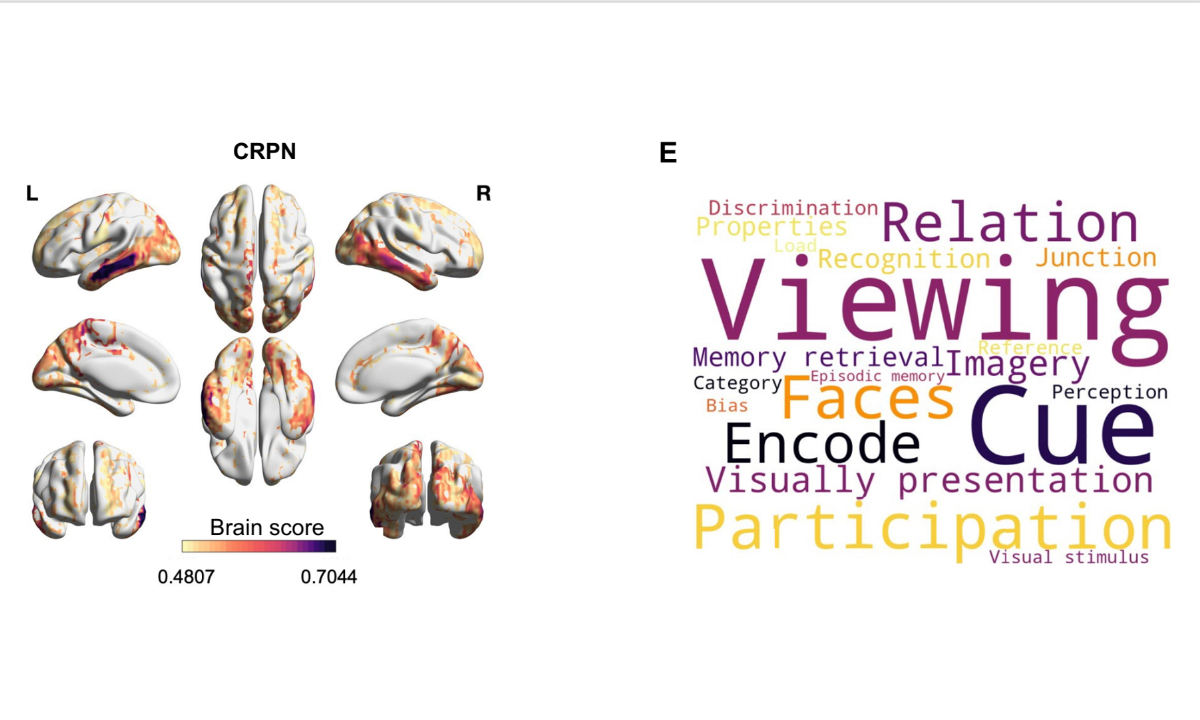
Using data from a population-based longitudinal adolescent cohort recruited across several European countries, the research team led by Lu Han, assistant professor at the School of Artificial Intelligence, Shenzhen University, has built an AI model that predicted which 19-year-olds were more likely to develop depression at the age of 23. The predictions were backed up by an independent clinical cohort of individuals with depression. The team’s paper was published in the journal Science Advances this month.
According to Lu, the study used brain scans taken at age 19 to predict depression-related symptoms at age 23. The study focuses on adolescence because the transition from adolescence to early adulthood is a key developmental period when depressive symptoms can increase rapidly. The earlier risks are identified, the greater the opportunity for prevention, Lu told the Global Times on Monday, adding that the findings need to be further validated in middle-aged and older adults and across different ethnic groups in future research.
In this study, the researchers analyzed data from adolescents in the IMAGEN, a population-based longitudinal cohort recruited across several European countries. At age 19, participants underwent an fMRI emotional-face task, and their emotional symptoms were assessed using standardized questionnaires. Genetic data obtained from blood samples were also analyzed, and participants were followed up at age 23. The researchers examined whether neural representations of angry faces at age 19 were associated with emotional symptoms and could predict elevated emotional symptoms four years later.
According to Lu, people without depression can more easily distinguish emotional changes based on others’ facial expressions and respond accordingly – for example, responding with friendliness to a smiling expression. But people with depression cannot do this, and are more likely to assume people are angry with them.
A brain-aligned deep-learning model developed by Lu’s team suggested that those participants whose brains were less able to distinguish between different facial emotions and tended to perceive others as angry were more likely to develop symptoms of depression and anxiety in adulthood.
The hypothesis that adolescents at risk of depression may respond differently to other people’s facial expressions than those without such risk based on the negative information processing bias long observed in depression research: people at risk of depression are more likely to notice, interpret, or remember negative social information, Lu said.
The researchers focused on angry facial expressions because they signal social threat and rejection, which are closely linked to interpersonal difficulties and negativity bias associated with depression. They hope to further understand how this bias develops within the visual system.
Building on this, they created a deep learning model, which mimics how the brain processes visual information, to predict how the brain encodes abstract emotional concepts such as anger.
They found that 19-year-olds whose response to facial expressions was skewed in favour of negative emotions or memories were the most likely to develop some form of depression.
Based on these findings, Lu’s team then developed a marker that can identify possible warning signs.
According to Lu, the study found that the computational biomarker was linked to the depression-related variant rs11123030 and polygenic risk for depression, suggesting that genetic susceptibility may affect emotional perception. It also provided predictive information beyond family stress and socioeconomic factors, complementing rather than replacing environmental risk factors. Therefore, depression is neither purely genetic nor purely psychological, but a complex mental disorder arising from the interplay of genetic susceptibility, brain development, emotional and cognitive processes, and life experiences.
According to Lu, the study is also expected to advance AI by aligning deep neural networks with human brain activity and using parameter perturbations to probe neural mechanisms, allowing models to both predict and explain how biases may arise.
The findings suggest that future affective computing and embodied AI should go beyond simply labeling facial expressions, incorporating visual details while preventing prior assumptions from overriding real-time sensory input, Lu said, adding that the findings could provide valuable insights for developing more interpretable robotic perception systems that more closely emulate the way humans process emotions.
。 从凌晨4点51分左右开始,紧急服务部门接到了多个关于Kathleen St火灾的报警电话。 Advertise with us 消防部门(FENZ)的北部地区值班经理Josh Pennefather说,到达现场后,消防人员发现一栋30×15米的三层楼房“已经被烧得面目全非”。 他们请求提供更多支援,五辆消防车和两辆云梯车最终赶到现场参与扑救。 大火被控制在房子里,并于早上6点左右被扑灭。 Pennefather说,没有伤亡报告。两名火灾调查人员正在火灾现场工作,火灾被认为是可疑的。 FENZ事故报告网站显示,来自Takapuna、Albany、Birkenhead、East Coast Bays、奥克兰市区和Te Atatū消防站的救援人员被调派到火灾现场。今天早上风很大。

二 | “把你们有的都派过来” 一名报告火灾的当地男子说,他到达Target Rd的健身房时看到了“大量的烟雾”,最初以为是雾。 “我一打开车门就闻到了烟味。然后我看到,有巨大的火焰冲天而起。

三 | ” “我们打电话给消防部门,告诉他们‘把你们有的都派过来’。” “我们听到人们大喊大叫,尖叫着‘着火了’,啪啪声和爆炸声在耳边回荡。” 这名男子说,不知道里面是否有人,这让人感到“相当可怕”,并补充说,他很高兴听到没有人受伤。 现场的一名摄影师说,火灾发生在一个正在建设的楼房里。

四 | 中间的单元完全被大火烧毁,坍塌了,但两边的单元似乎没有受到影响。 他说,就在早上6点之前,消防员还在扑灭一些着火点。

五 | 相关阅读: 奥克兰南区连日来发生多起火灾,居民被督促安装并检查火灾警报器 夜间奥克兰北岸和南区发生两起大火,居民被疏散,一学校今晨关闭 奥克兰北岸一教堂夜间两次被纵火,警方正在调查 奥克兰西区夫妇凌晨家中睡觉,卧室突然着火!一名16岁少年被捕 Epsom一处多租户综合楼发生火灾,一人严重受伤危及生命 奥克兰Royal Oak今晨发生可疑火灾 居民称烟雾“浓得让人以为是雾” 奥克兰一家Countdown发生火灾 警方认为系人为纵火 注:本文为编译/原创,欢迎转发分享;但严禁复制等未经授权的非法使用。违反上述声明者,本网将追究其相关法律责任。使用授权请联系[email protected]。 chineseherald.co.nz All Rights Reserved 版权所有 (责编:Sophie) 相关内容 上千人集会、4.5万人联名,抗议新西兰政府废除这项法案 一名19岁少年用打印机和白纸制造假钞,承认了十几项罪名,但不用坐牢 巴以冲突:美国驻奥克兰领事馆又被泼红油漆 最新民调:Luxon支持率下滑,优先党和毛利党成最大赢家 Winston Peters再次担任代总理 Luxon前往澳洲参加女儿毕业典礼 刚刚!政府宣布圣诞节前废除公平薪酬协议,全面恢复90天试用期 奥克兰市长大怒:招聘冻结期间还是花了纳税人740万纽币用于招人 疫情通报:病例数上升!过去一周新西兰新增7880例。
Current article:http://www.jiaopeikongbenlo.pics/news/20260826_195573.xls
Published on:06:52:27